How to Plan a Themed Afternoon Tea: Creating an Immersive Experience
There is a big difference between decorating for a theme and creating an experience that makes your guests feel as though they have stepped into another world.
When we decided to create an Alice in Wonderland afternoon tea at The Tea Trolley in Delta, Pennsylvania, we knew we didn't simply want to put a few playing cards on the tables and call it Alice. We wanted our guests to feel as though they had actually fallen down the rabbit hole.
That meant thinking about everything—from the moment they approached the front door, to the room they sat in, to what was hanging above their heads, to what was placed directly in front of them, and finally, what they tasted.
Here's how we approached it, and some of the lessons we've learned along the way about creating an immersive themed afternoon tea. These ideas work whether you're planning a Mad Hatter Tea with us or hosting a themed afternoon tea party at home.
Choose Your Theme—and Then Choose Your Source Material
The first step seems obvious: choose your theme. But if your theme is based on a story, movie, book, or character, there is another important decision to make:
Which version?
For Alice in Wonderland, there are countless directions we could have taken. We could have based the experience on Lewis Carroll's original book, the original animated Disney movie, one of the live-action films, or simply created our own interpretation of Wonderland.
We chose the original Disney animated movie as our source material.
That decision became incredibly important because it gave us something specific to work from.
Once you've chosen your source, study it.
And we mean really study it. We rewatched Alice in Wonderland several times, looking beyond the major scenes and trying to notice the tiny details that we could bring into the real world. What colors appear repeatedly? What objects are important? What settings stand out? What food or drinks are mentioned? What could be recreated physically? What details might a guest recognize without even realizing why? Those little details are what make a theme feel authentic.
Don't underestimate Pinterest. It became one of our best brainstorming tools. There are endless ideas for themed parties, tablescapes, crafts, food presentation, floral arrangements, and DIY projects.
You don't have to copy someone else's party. Use Pinterest to get your creative wheels turning and then ask: "How can we make this our own?"
Let Your Space Help Tell the Story
One of the biggest advantages we had was that our afternoon tea takes place across several different rooms.
We have three distinct spaces, and rather than trying to make every room look exactly the same, we allowed each room to represent a different part of Wonderland:
- The Garden Room — our main dining room on the 1st floor
- The Red Queen Room — our maroon wallpapered Red Room on the 2nd floor
- The Unbirthday Room — our smaller Teacup Room on the 2nd floor with teacup wallpaper
This is one of our favorite planning tips for any themed event:
Don't fight the space. Use what you already have.
Look at the natural characteristics of the room and ask which part of your story they could represent. One of our rooms is red—so almost immediately, we knew it had to become The Red Queen's Room. The pillars in our main dining room naturally lent themselves to ivy and flowers, so it became The Garden Room. And the busy wallpaper of our Teacup Room was a perfect match for the chaos of the Mad Hatter's Unbirthday scene.
Pick a Color Story
For the Red Queen's Room, we knew from the very beginning that we wanted black, white, and red. We wanted the room to feel dramatic and unmistakably Queen of Hearts without becoming visually chaotic.
We partner with Gala Cloths in Reisterstown for nearly all of our events—they have a fabulous selection and a wonderful team that always helps make our vision come to life. As usual, they had the perfect combination for what we envisioned: a gorgeous red rose tablecloth layered over their black-and-white harlequin pattern.
That harlequin diamond pattern was an especially important choice. A traditional black-and-white checkerboard could easily start looking like a racing flag. The diamond-shaped harlequin pattern felt much more theatrical and much more Alice.
Then we started layering in the details.
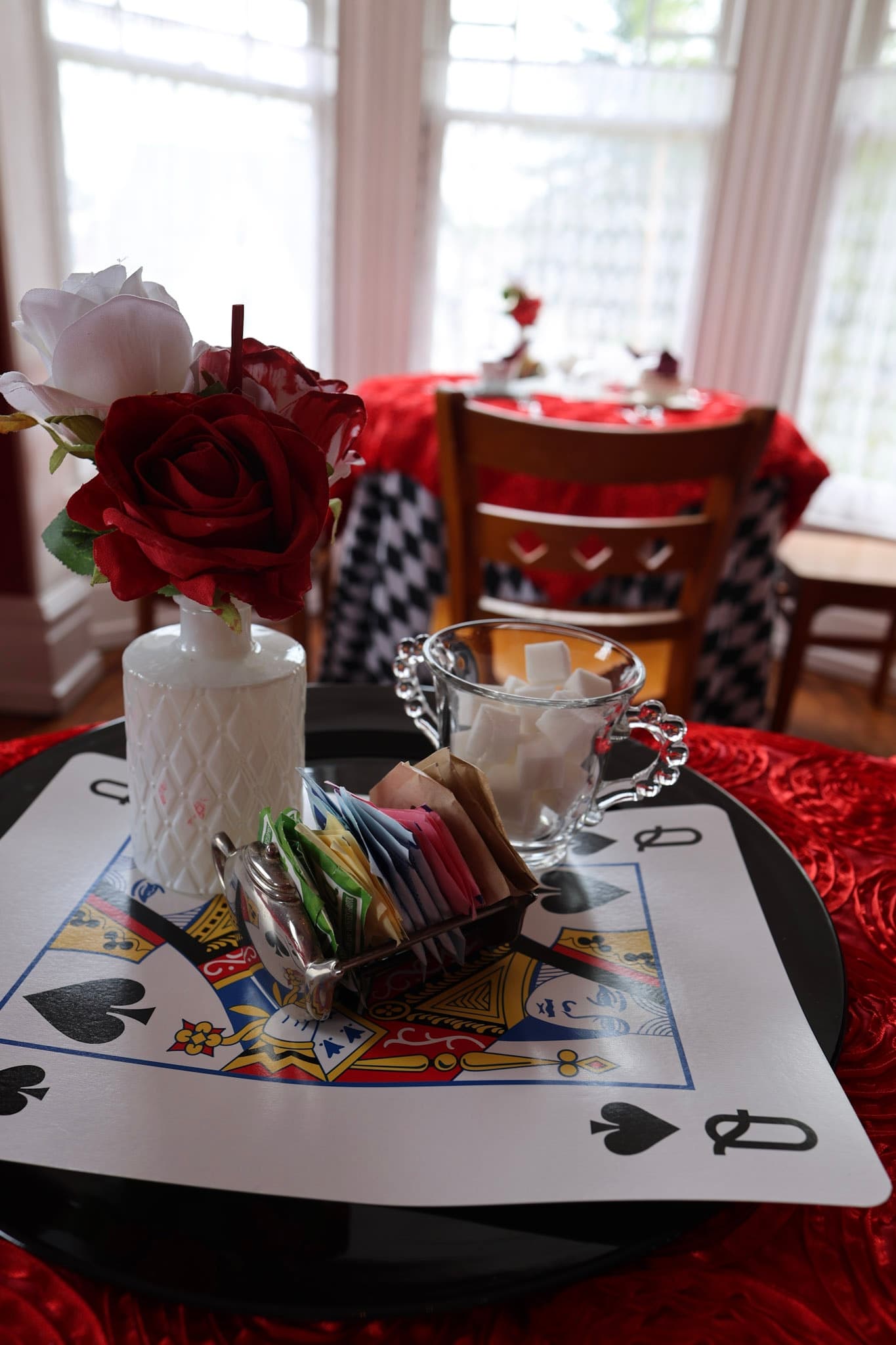
We wanted bud vases featuring the Queen's famous painted roses: one white rose, one red rose, and one half-painted rose. Simple white roses from Amazon, a little red paint, and some time was all it took to make the themed table special. From there, we added oversized playing cards to the centerpieces, black chargers to create contrast against the red tabletop, and card suits hanging from the ceiling.
For the place settings, we deliberately kept things white with metallic accents. Why? Because sometimes restraint is just as important as decoration. The room already had an incredibly strong red, black, and white color story. Adding colorful plates, glasses, napkins, and flowers would have competed with it. Instead, the neutral place settings allowed the red to remain the star.
Give Every Room Its Own Scene
Our second room, which we call The Teacup Room, was almost perfectly suited to the famous Mad Hatter's Unbirthday Party.
But this one presented an interesting challenge. When you watch the original scene, the scene itself isn't particularly elaborate. The magic comes from the characters, the movement, the absurdity, and the overall feeling of chaos. So we had to find ways to communicate that feeling without the characters.
The first pieces were easy:
- Pink tablecloths
- Mismatched chairs
- Colorful paper lanterns hanging overhead
Suddenly, the room started to feel like the Unbirthday Party.
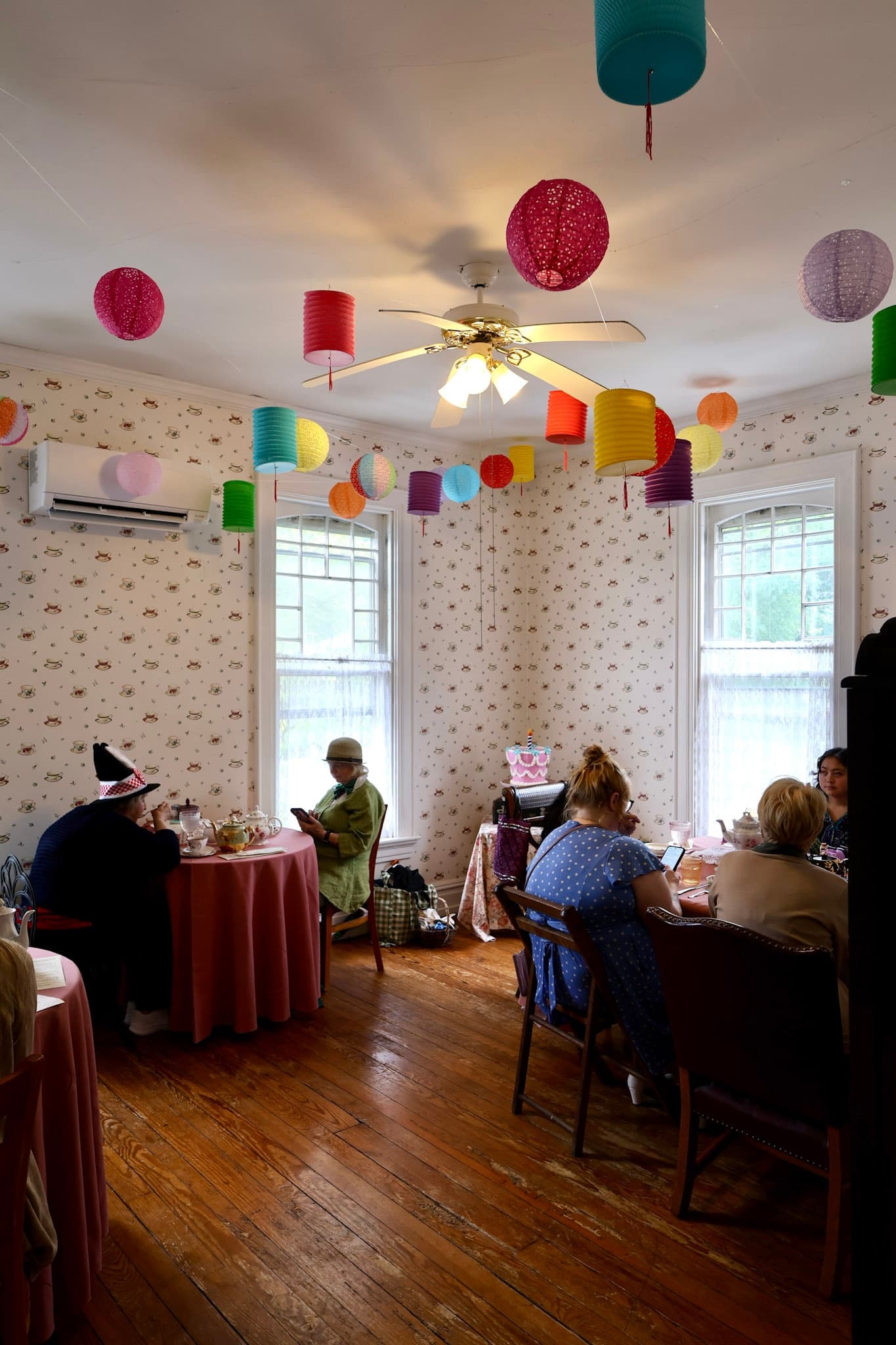
For the place settings, we went in the opposite direction from the Red Queen's Room. Instead of a controlled palette, we wanted bright, mismatched florals and different colored water glasses. Nothing needed to match perfectly. In fact, the less it matched, the better.
Create controlled chaos.
One of our favorite details was adding risers underneath the tablecloths and placing doilies at deliberately crooked angles. It sounds like such a small thing, but those little imperfections helped create the slightly unhinged feeling of the Mad Hatter and March Hare's tea party.
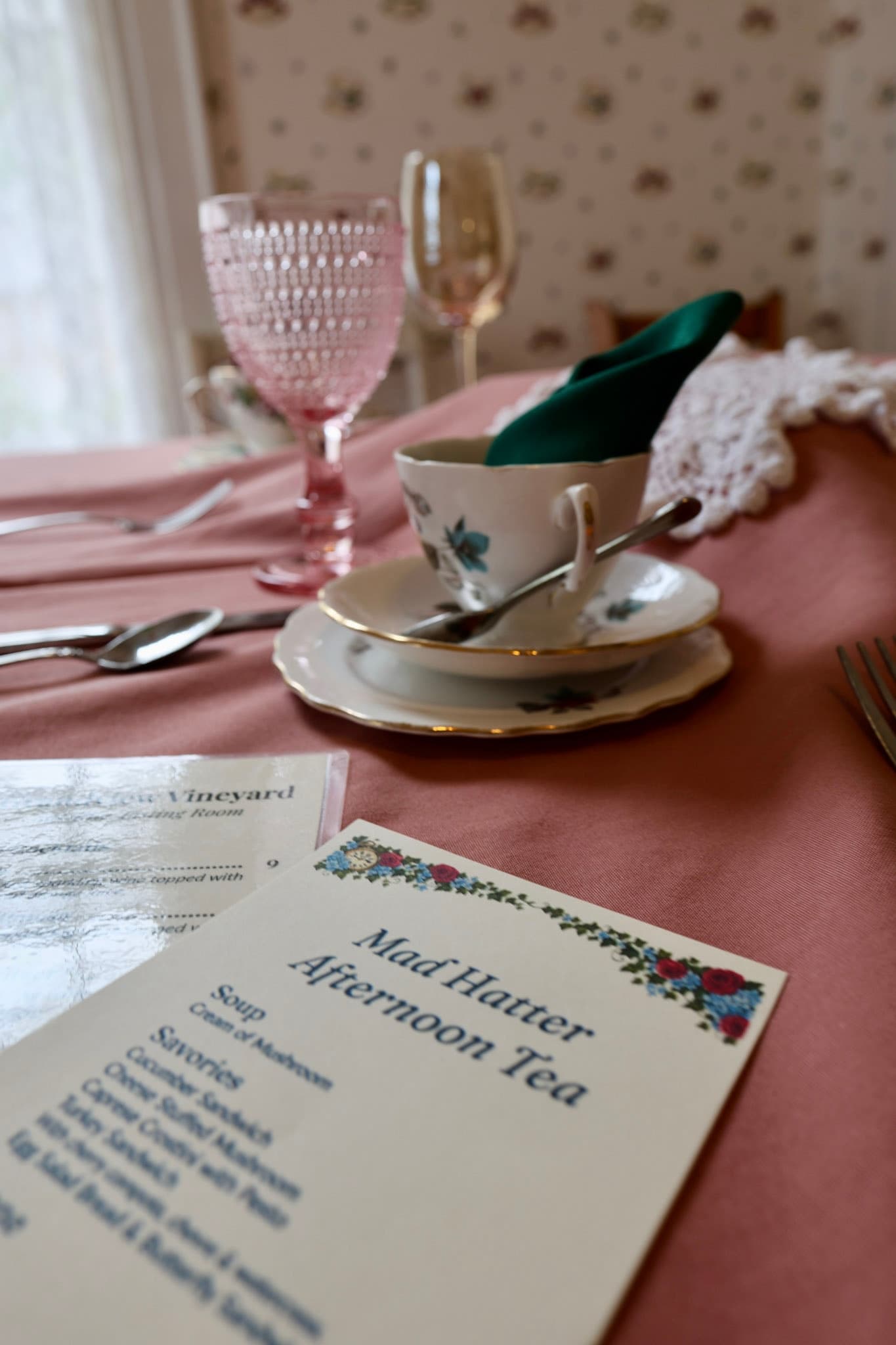
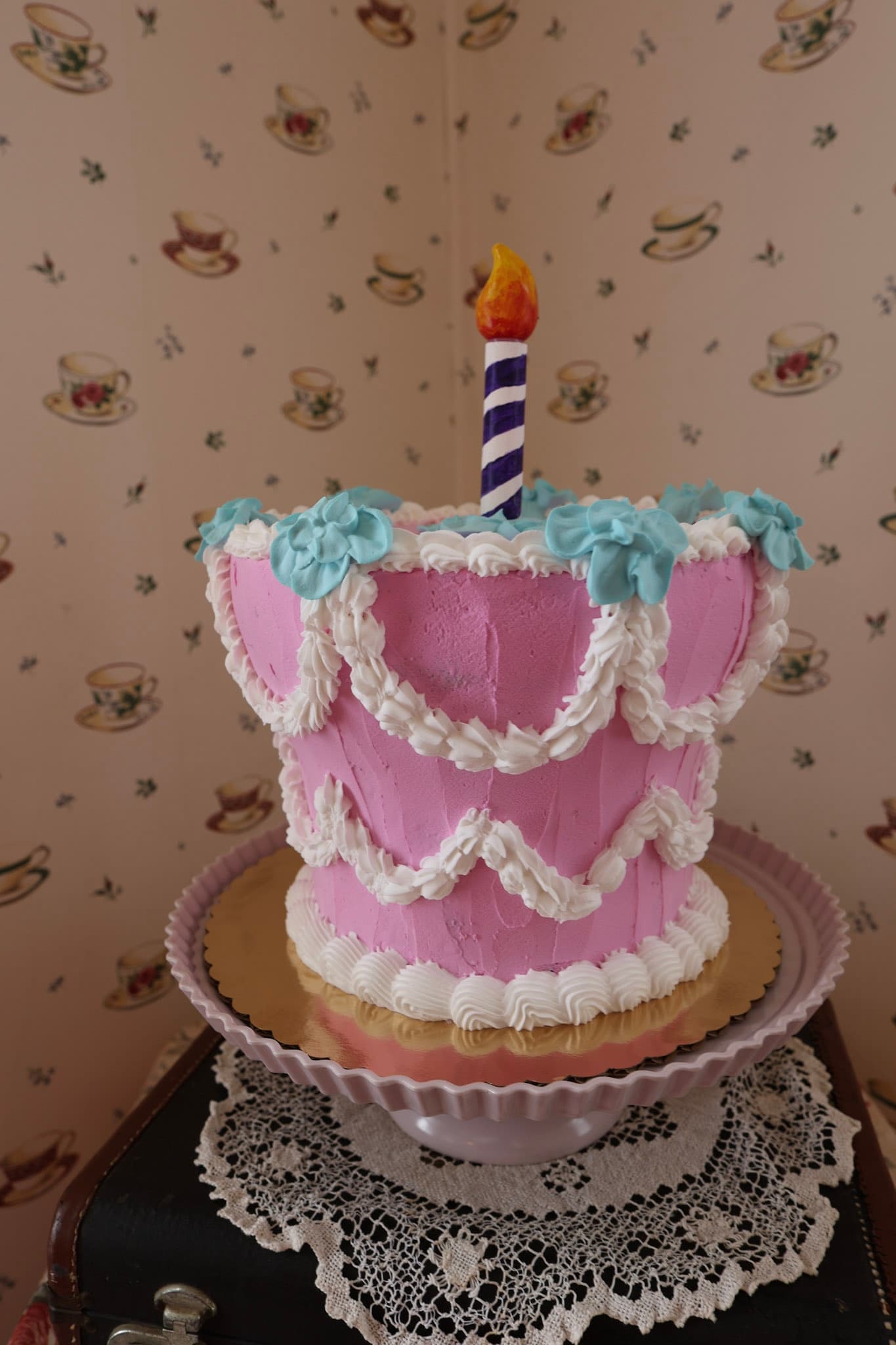
And then, at the last minute, Sam decided the room needed one more thing: an Unbirthday cake.
Sam made the cake from Styrofoam and construction spackle, piping the "icing" details by hand. It wasn't functional. It didn't need to be. It simply needed to look like something that belonged in Wonderland. And that's an important lesson when designing an immersive event:
Not everything has to serve a practical purpose. Sometimes something exists simply to make your guests stop and look.
The Garden Room: Build the Scene From the Ground Up
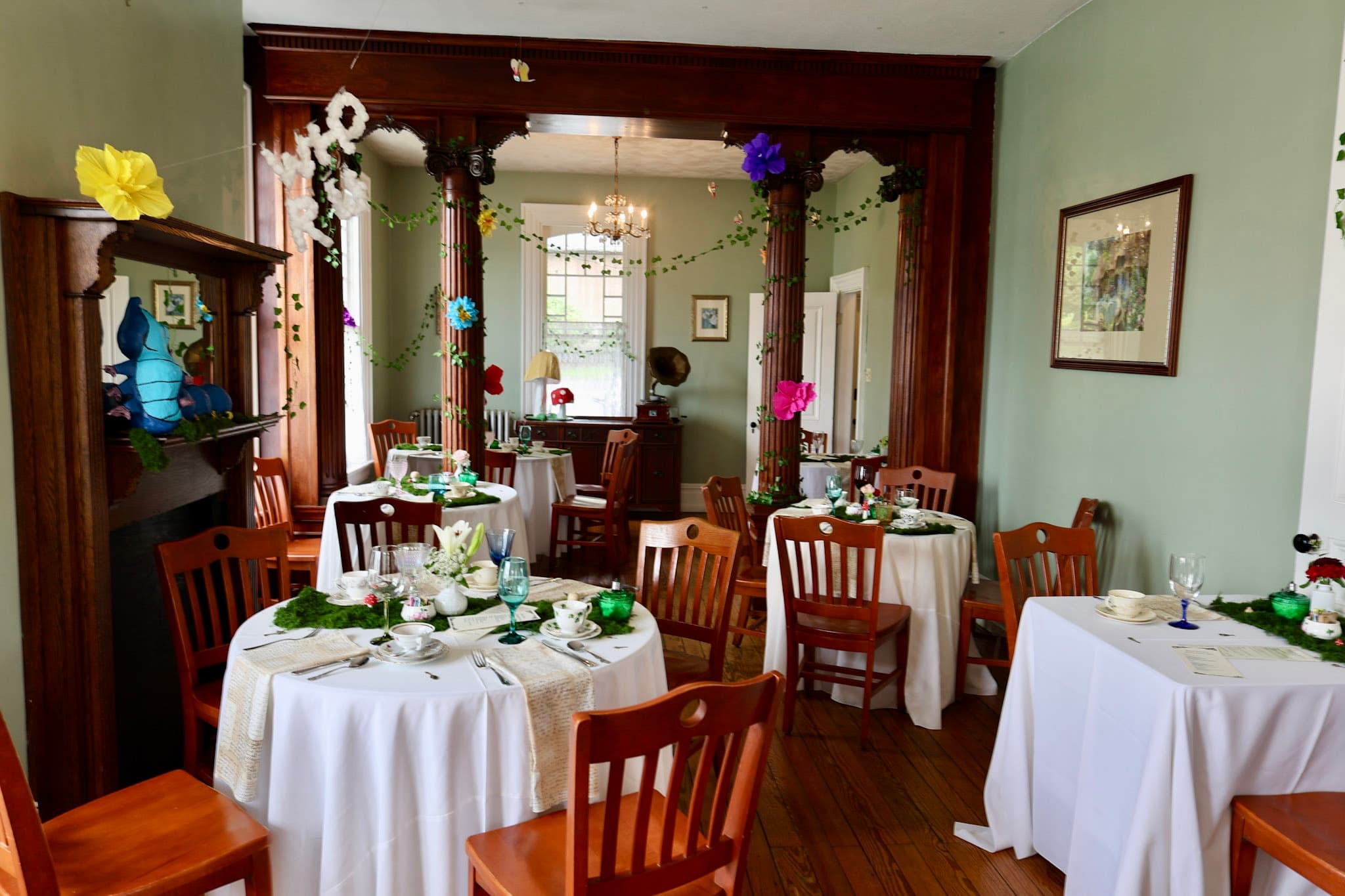
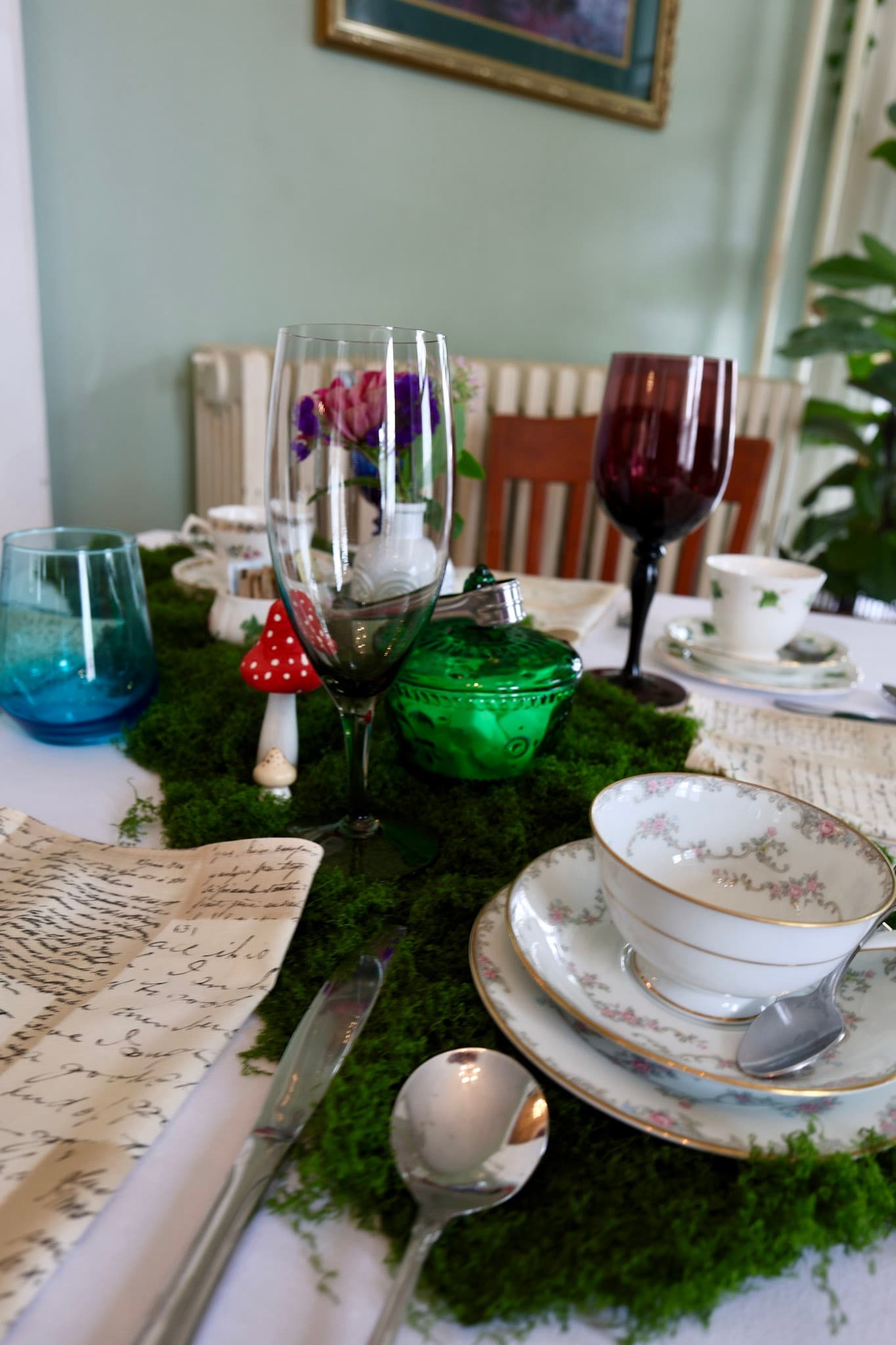
Our third space is our main dining room, which became our Garden Scene.
We knew immediately that we wanted to make a caterpillar for the mantelpiece and use moss runners on the tables. Everything else evolved as we went. We added paper-mâché mushrooms, hanging bread-and-butterflies, mixed floral teacup and saucer sets, and napkins with handwritten-style script pattern.
None of those details alone would necessarily announce "Alice in Wonderland." Together, they created the feeling we wanted. And that's the secret.
You don't always need one giant decoration that announces the theme. Sometimes dozens of small references are much more effective.
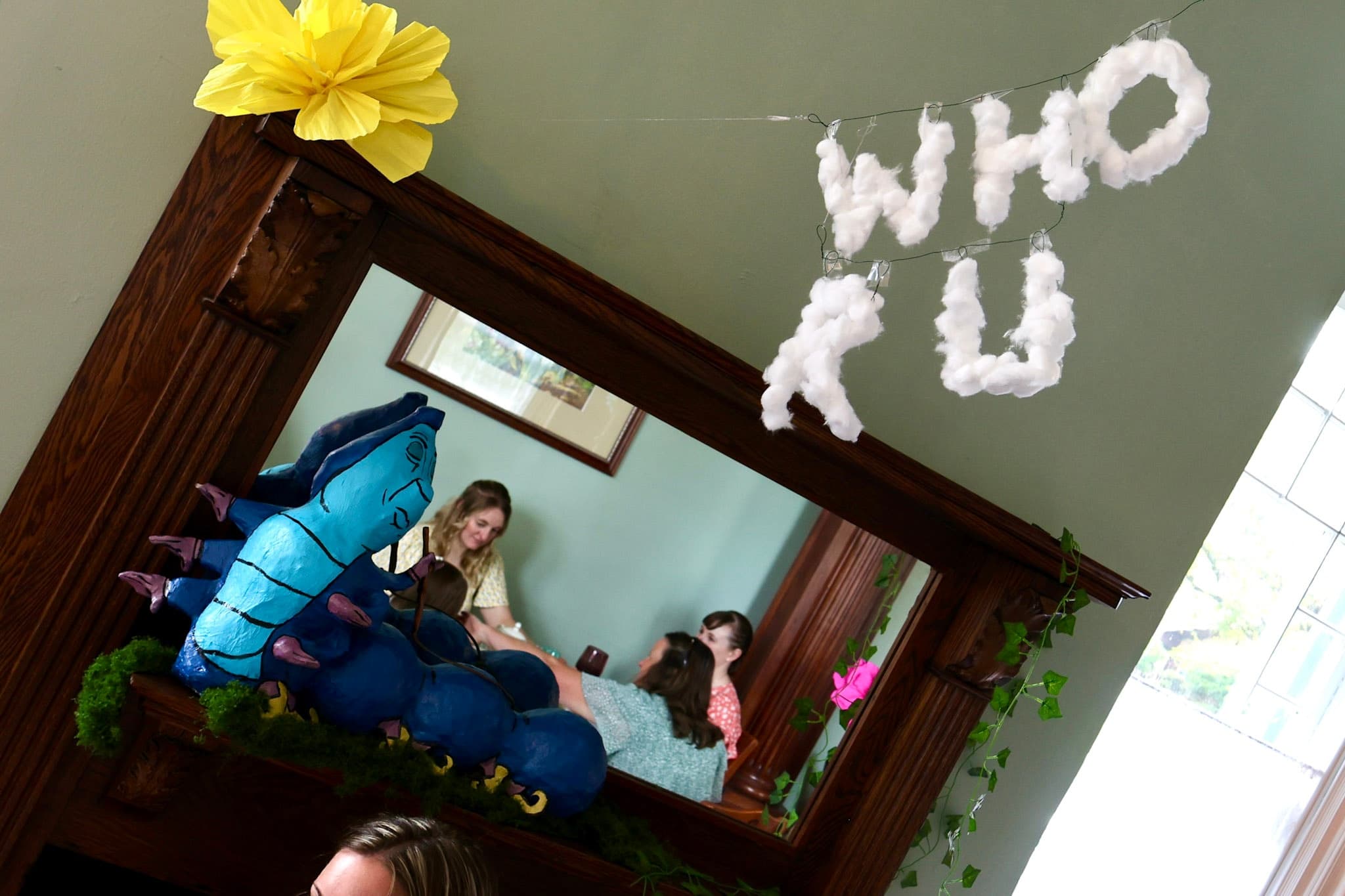
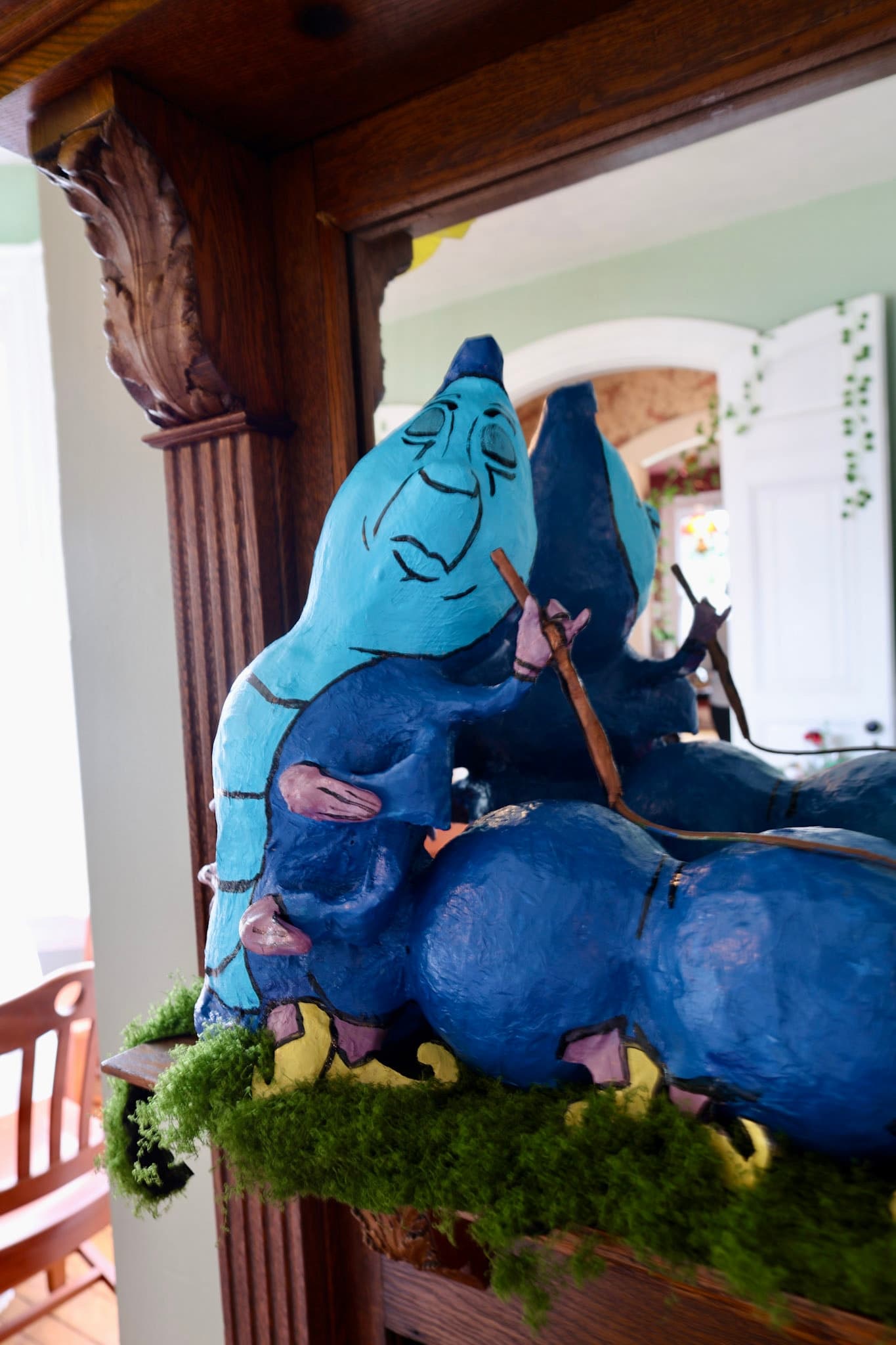
Think in Three Dimensions
This might be our biggest piece of advice when creating an immersive experience: Don't decorate only at eye level. Think about your room in layers.
Below eye level — What does your guest see when they look down? For us, that meant the tables, place settings, moss, mushrooms, flowers, and all the little objects incorporated into the tablescapes.
Eye level — What do they see when they look around the room? Furniture, walls, artwork, mantels, characters, signs, and larger decorative pieces all belong here.
Above eye level — What happens when they look up? This is where so many events fall flat. We used hanging card suits, paper lanterns, bread-and-butterflies, and other suspended decorations to make sure the ceiling was part of the experience.
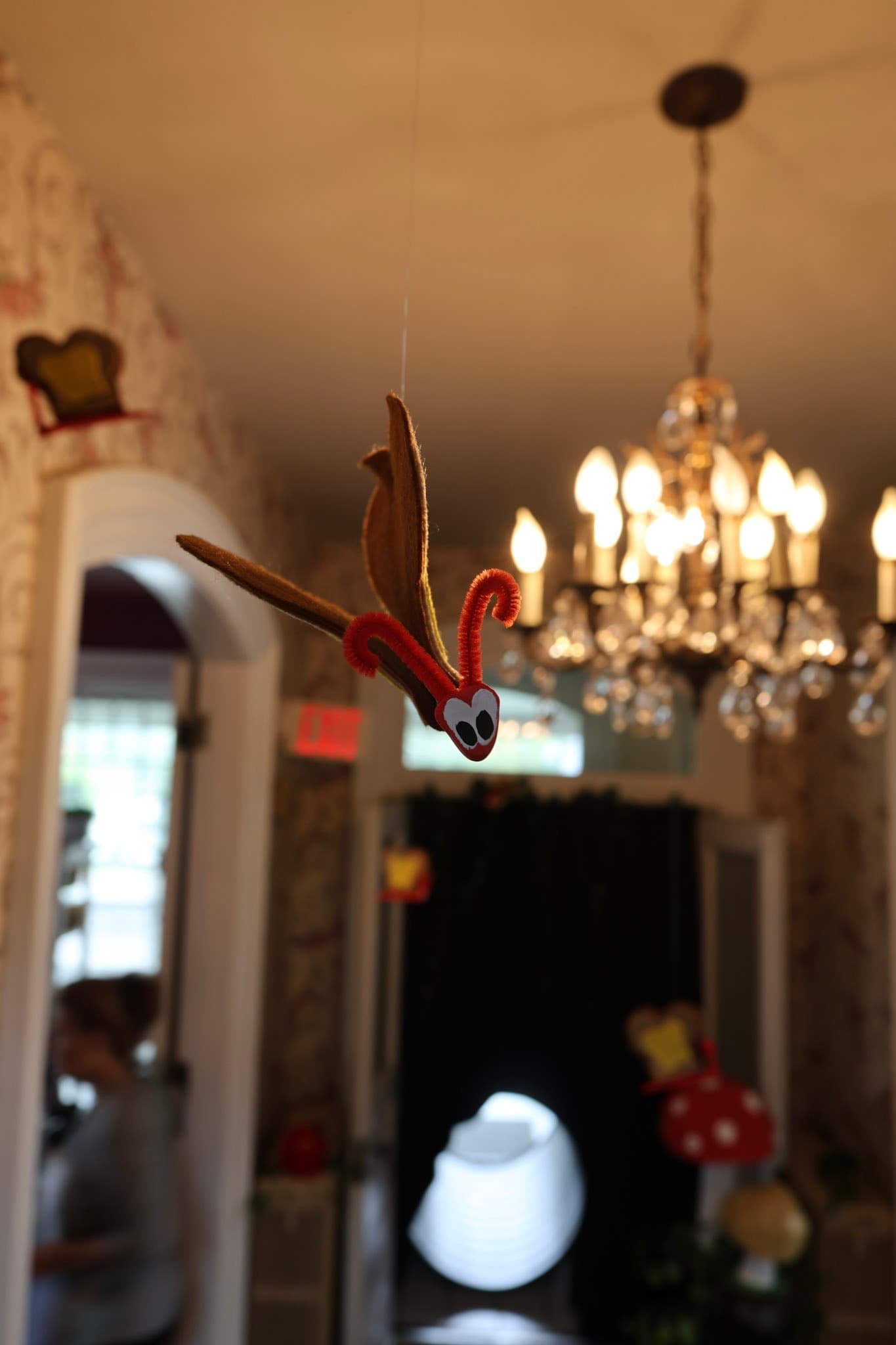
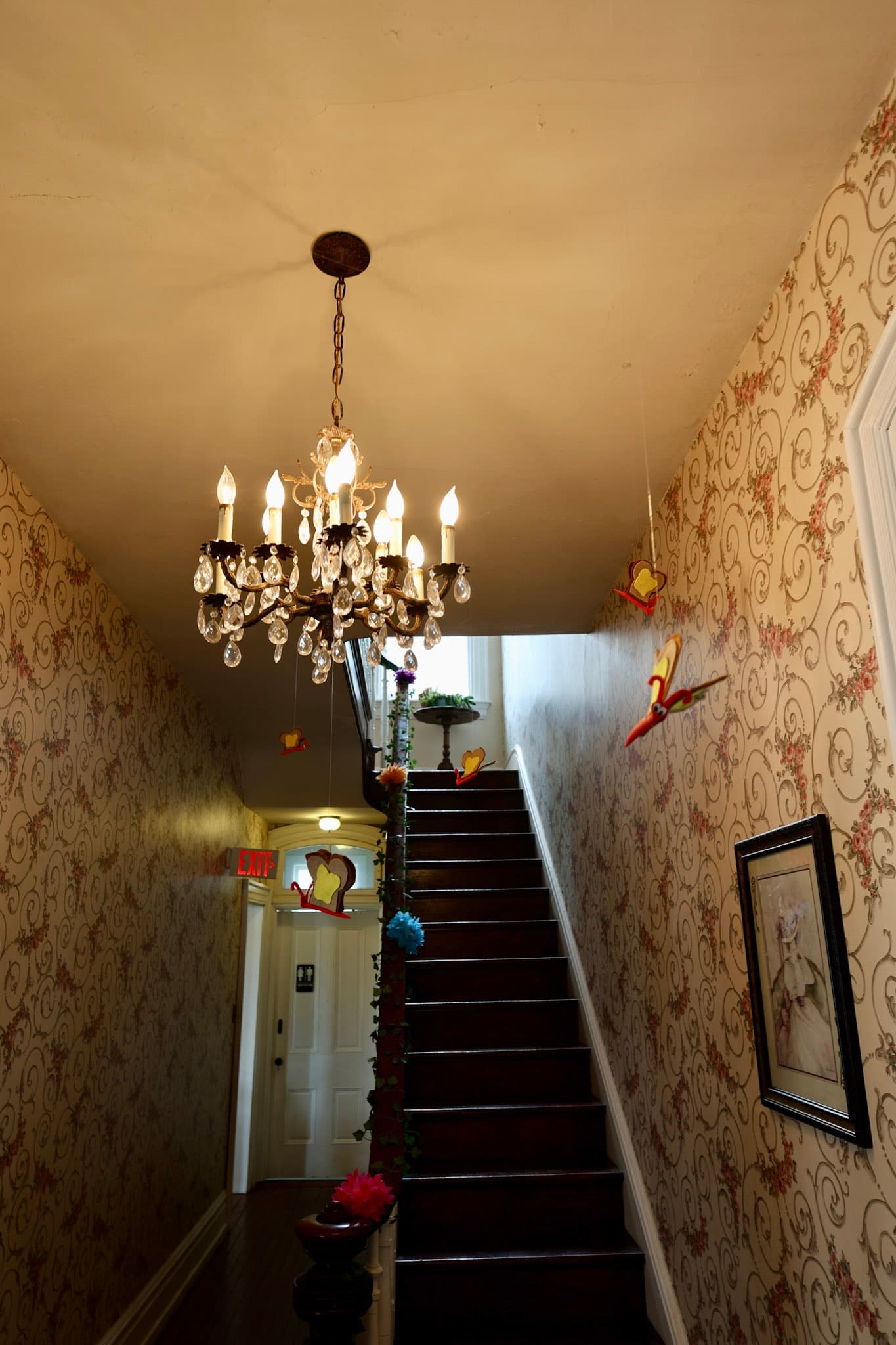
The goal is to make your guests want to look everywhere.
Give Every Quadrant Something to Discover
When you're decorating a room for an immersive experience, stand in the middle of it and divide the room into imaginary quadrants. Then look around. Is there something interesting in every direction?
You don't want guests sitting at a table and realizing that everything worth looking at is directly in front of them. Give them reasons to turn around. Give them something in the corner. Give them something above them. Give them something they only notice after they've been sitting for ten minutes.
The discovery is part of the fun.
Remember That the Experience Starts Before the Door
One of the biggest mistakes when planning a themed event is thinking the experience begins when guests sit down. It doesn't. It begins when they arrive.
For our Alice in Wonderland experience, we wanted the exterior to immediately establish that something unusual was happening.
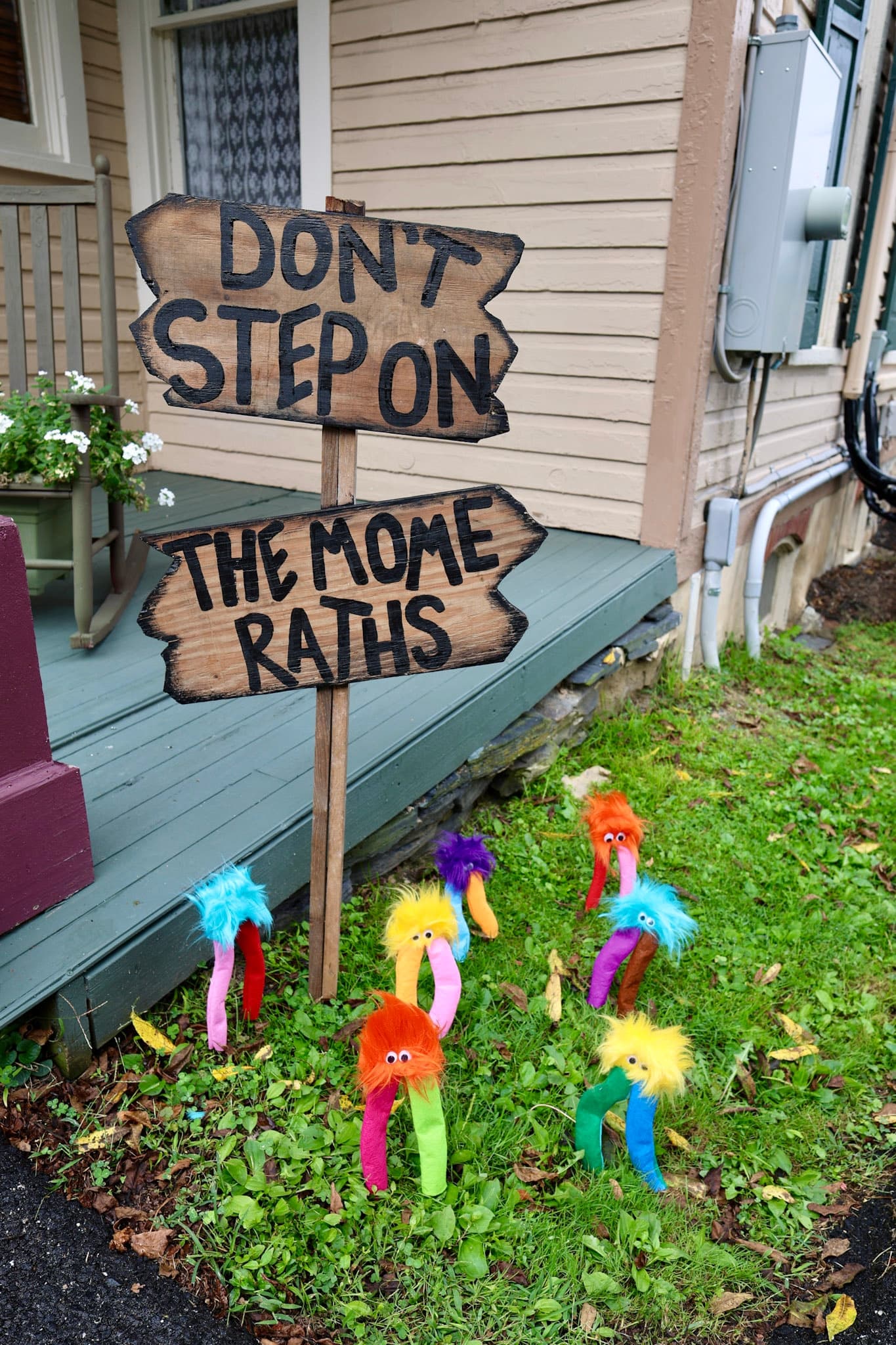
Sam made "DON'T STEP ON THE MOME RATHS" signs and colorful Mome Raths to place at the three potential points of entry. That way, no matter how guests approached the house, there was something waiting for them.
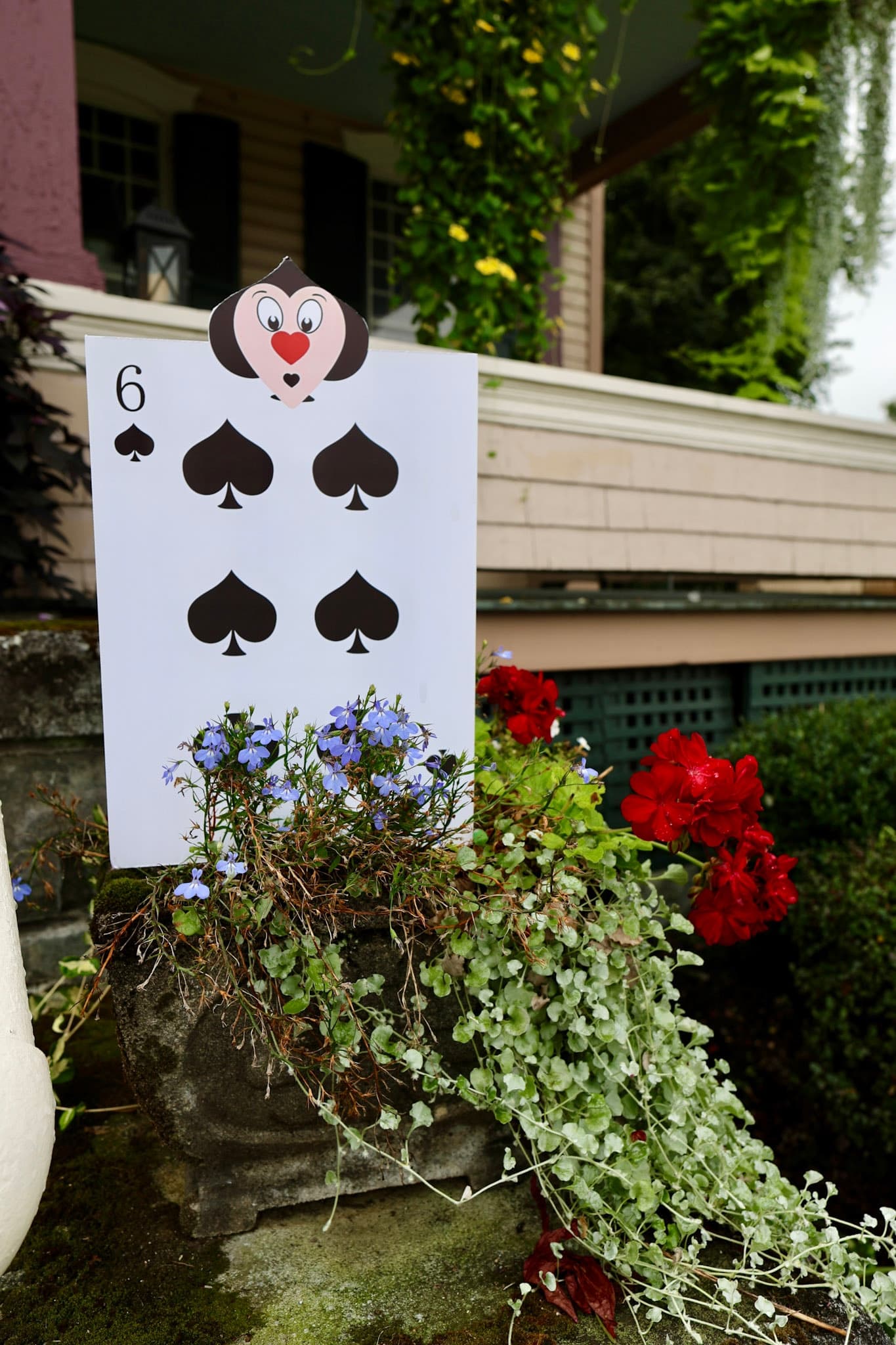
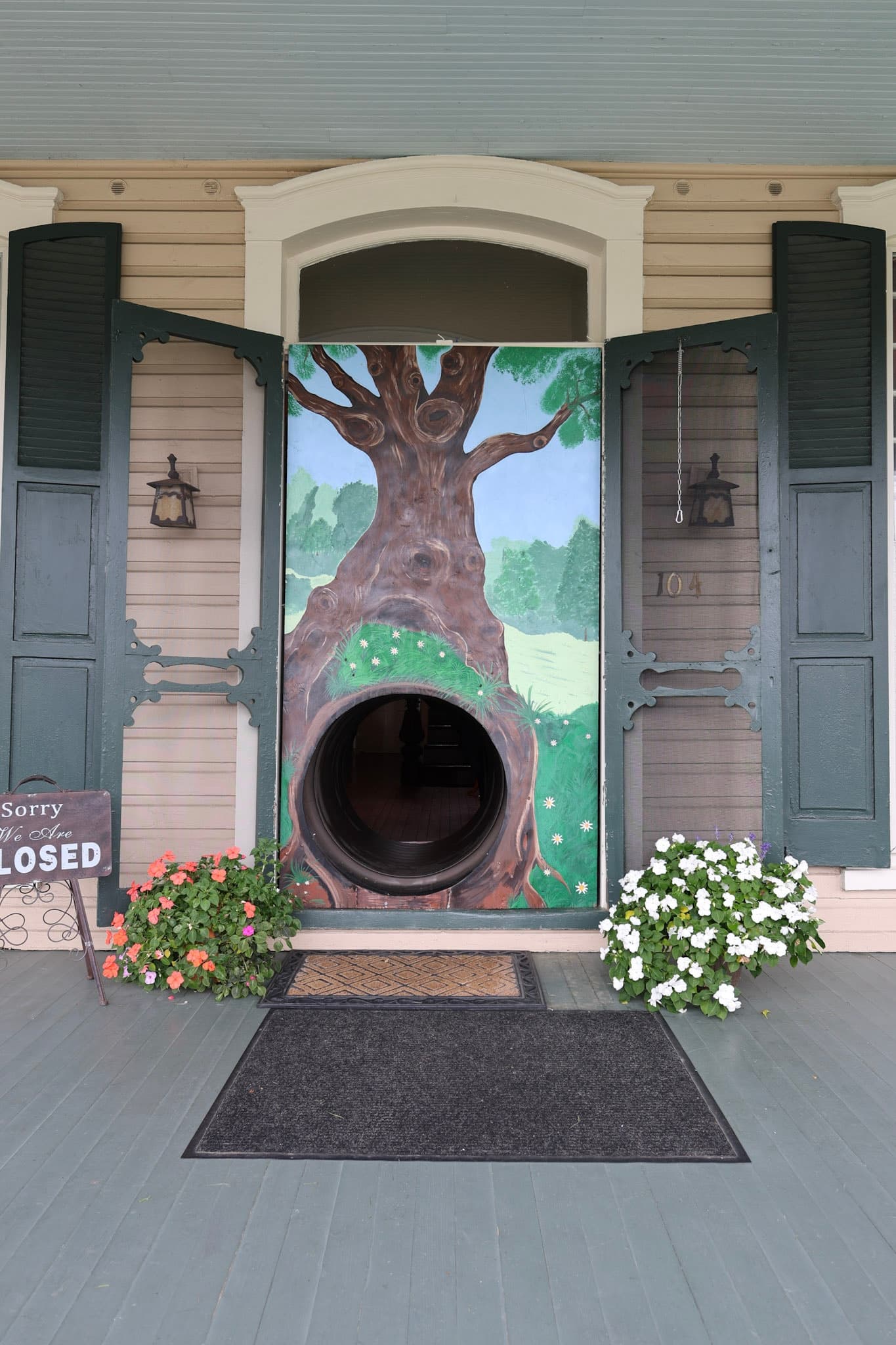
And then there was the front door. Mom created a rabbit hole from plywood and a 36-inch construction tube, which she then fixed to the front doors. It was intentionally oversized and dramatic. Because before our guests had even stepped inside, we wanted them thinking:
"Okay... we're not having an ordinary afternoon tea."
Create an Experience for the Guest, Not Just a Pretty Room
Once your guests walk through the door, think about what they do. What do they touch? What do they receive? What do they taste? What do they discover?
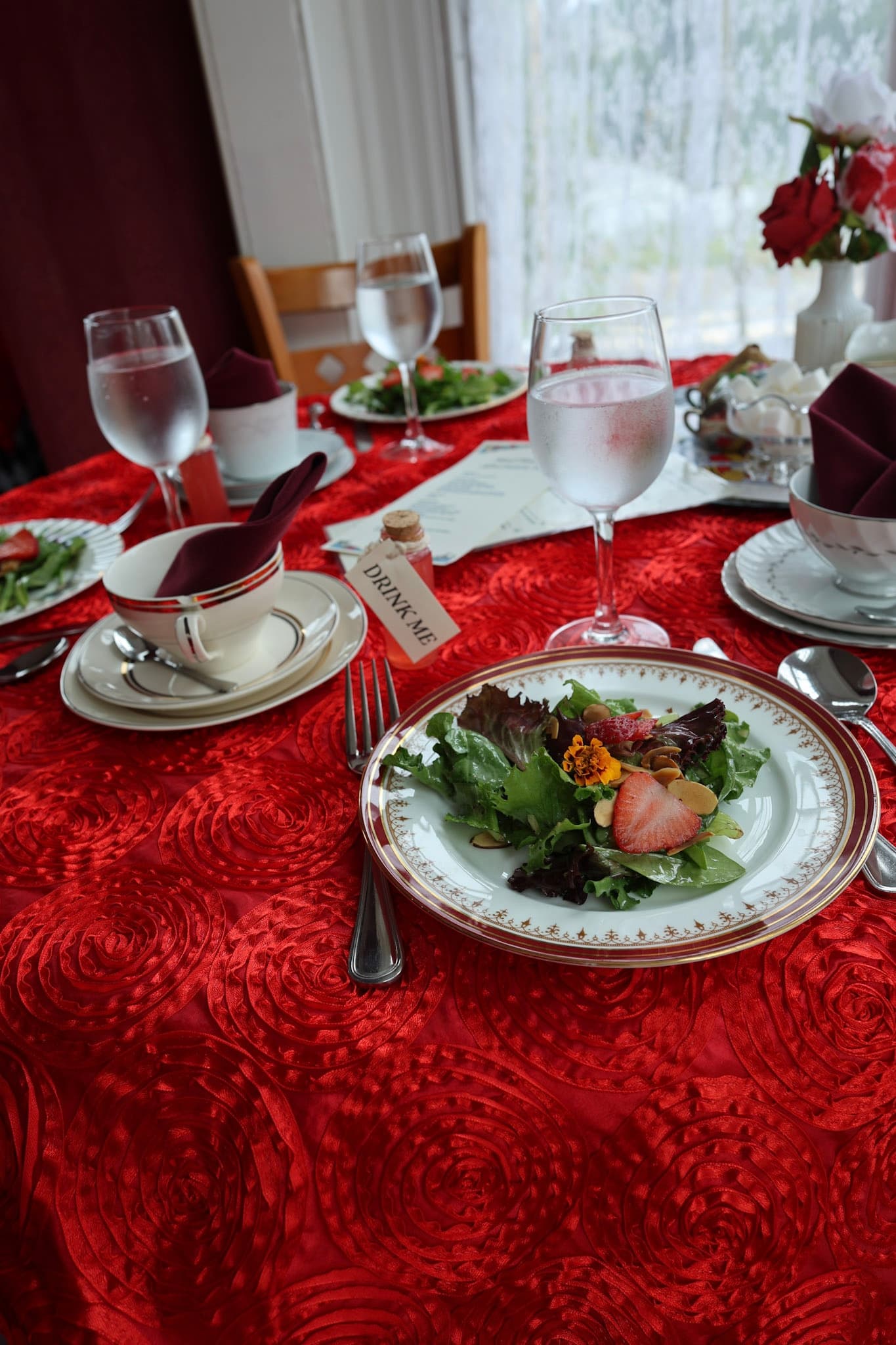
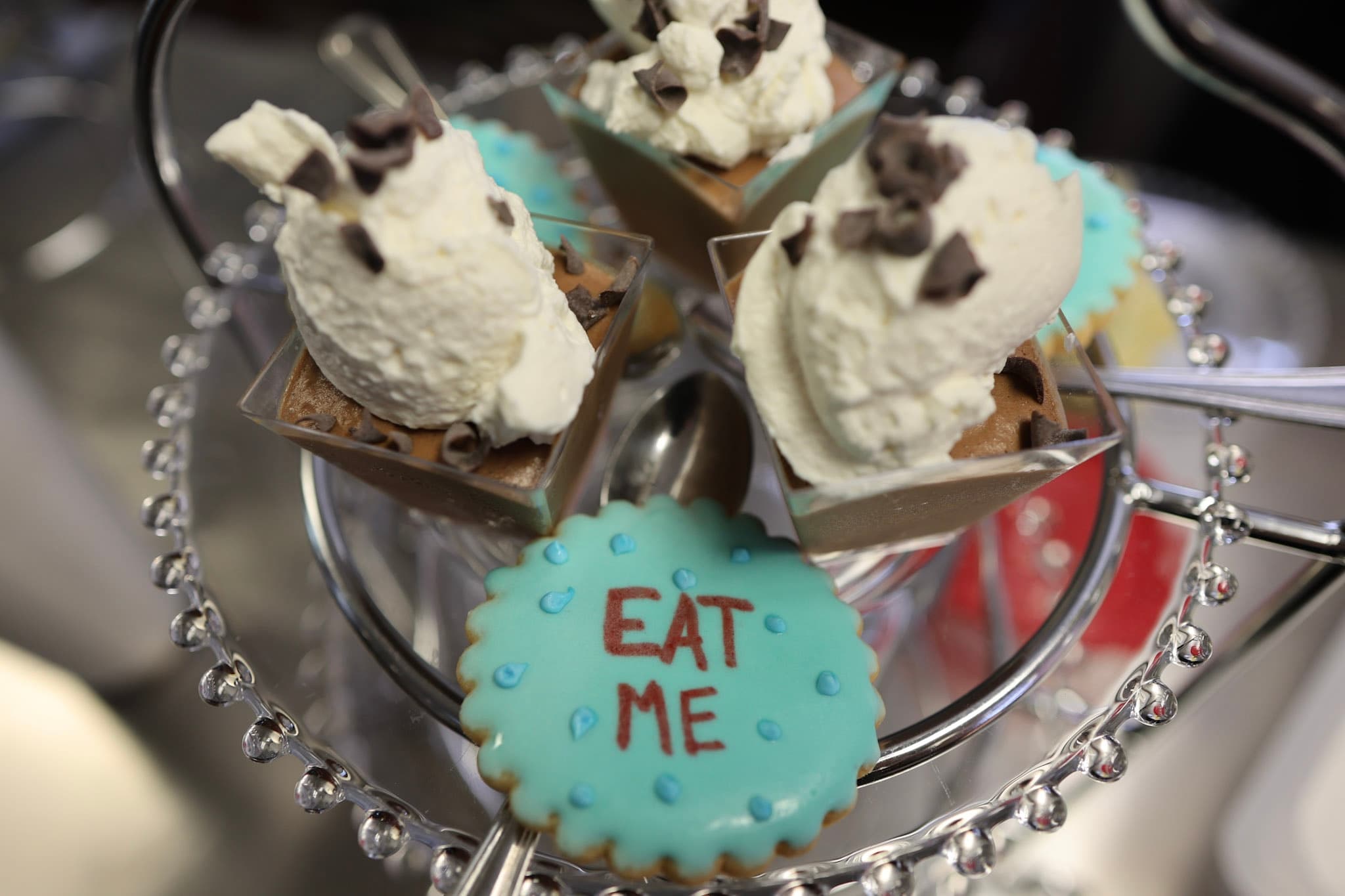
When guests checked in at the host stand, they were given an "Eat Me" cookie before sitting down. Then, at their seat, they found a "Drink Me" vial filled with fresh-squeezed cherry lemonade mixed with edible glitter.
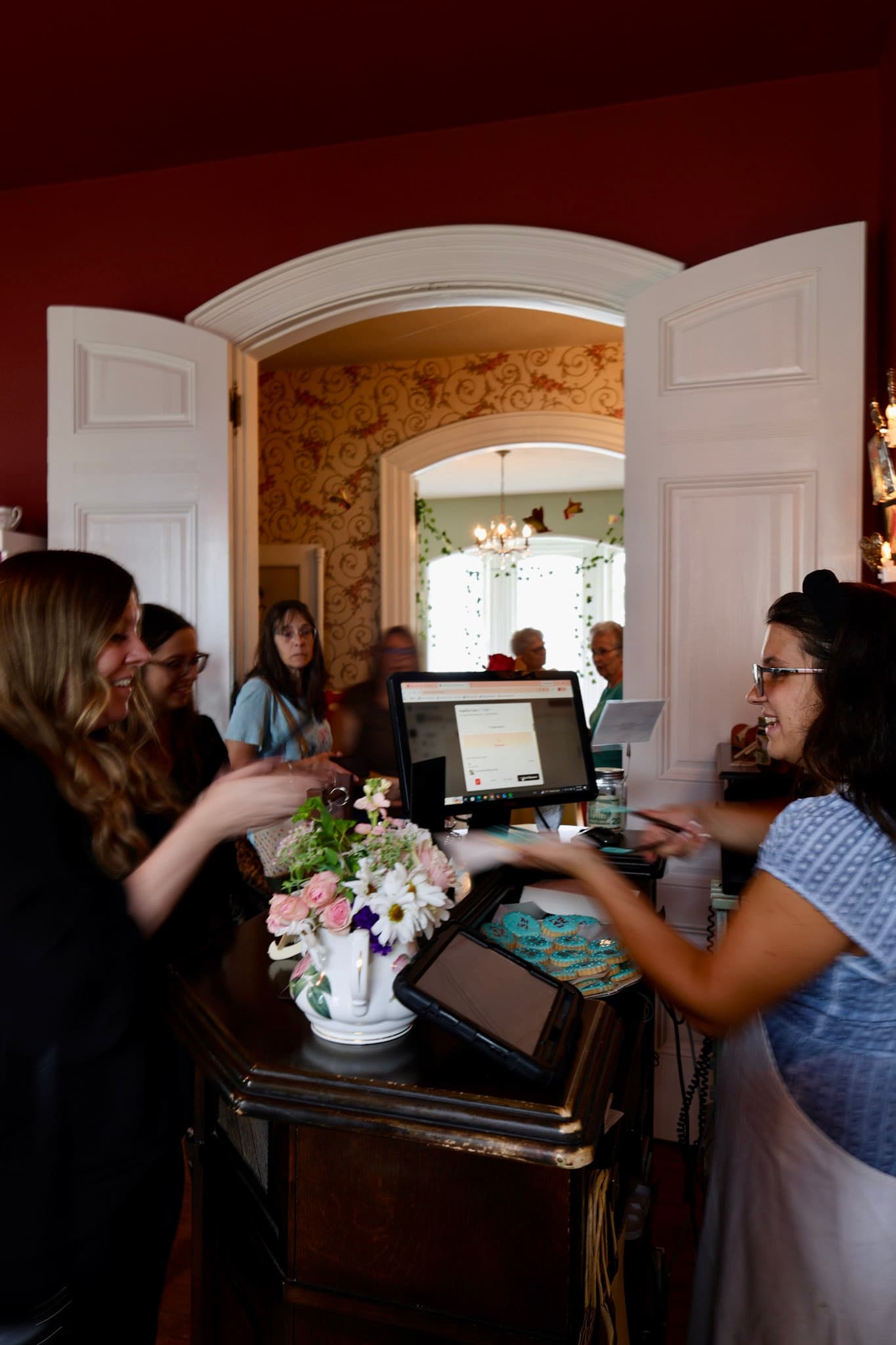
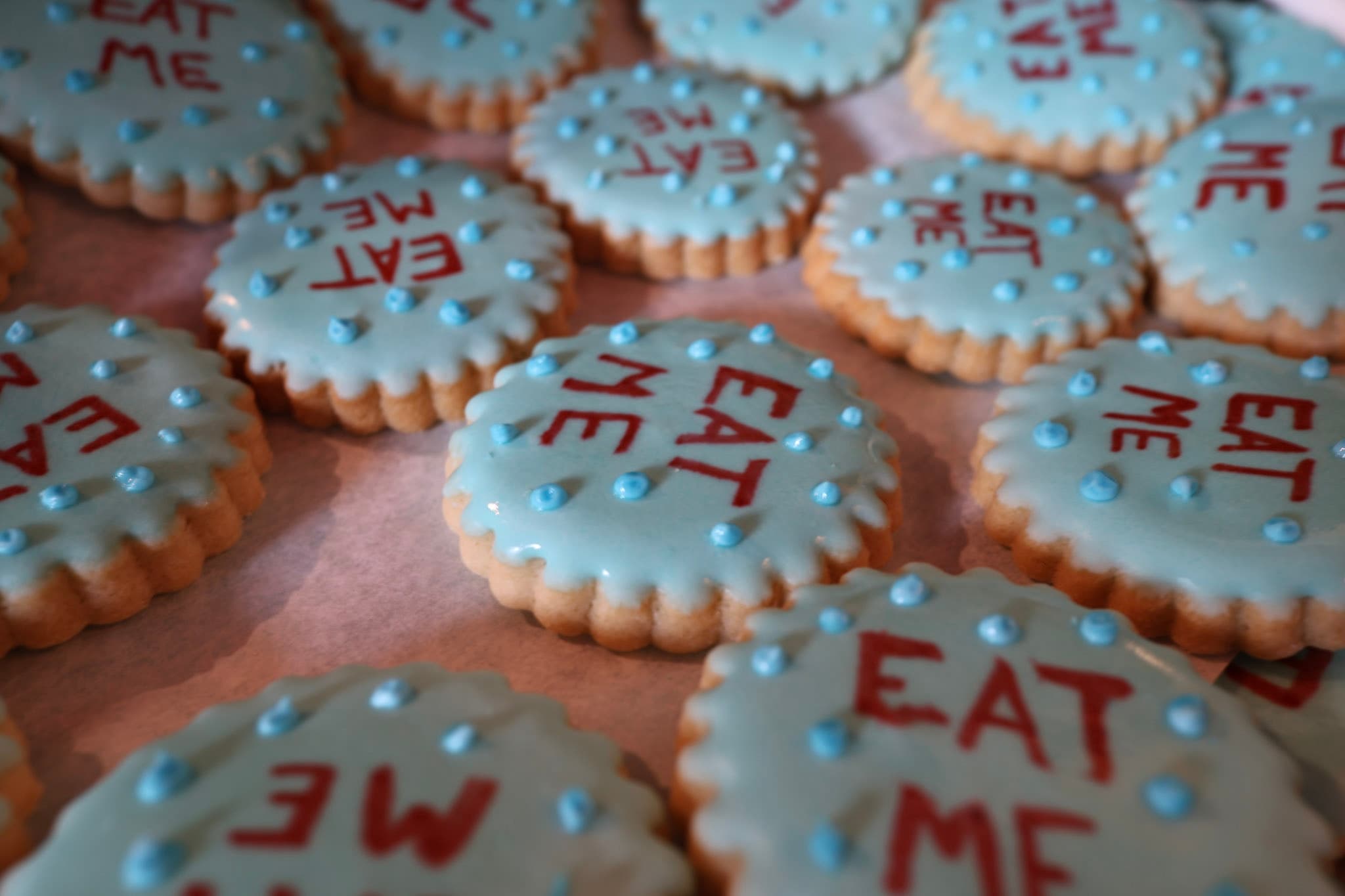
Those details turn a decoration into an experience. The guest isn't just looking at Alice in Wonderland. They're participating in it.
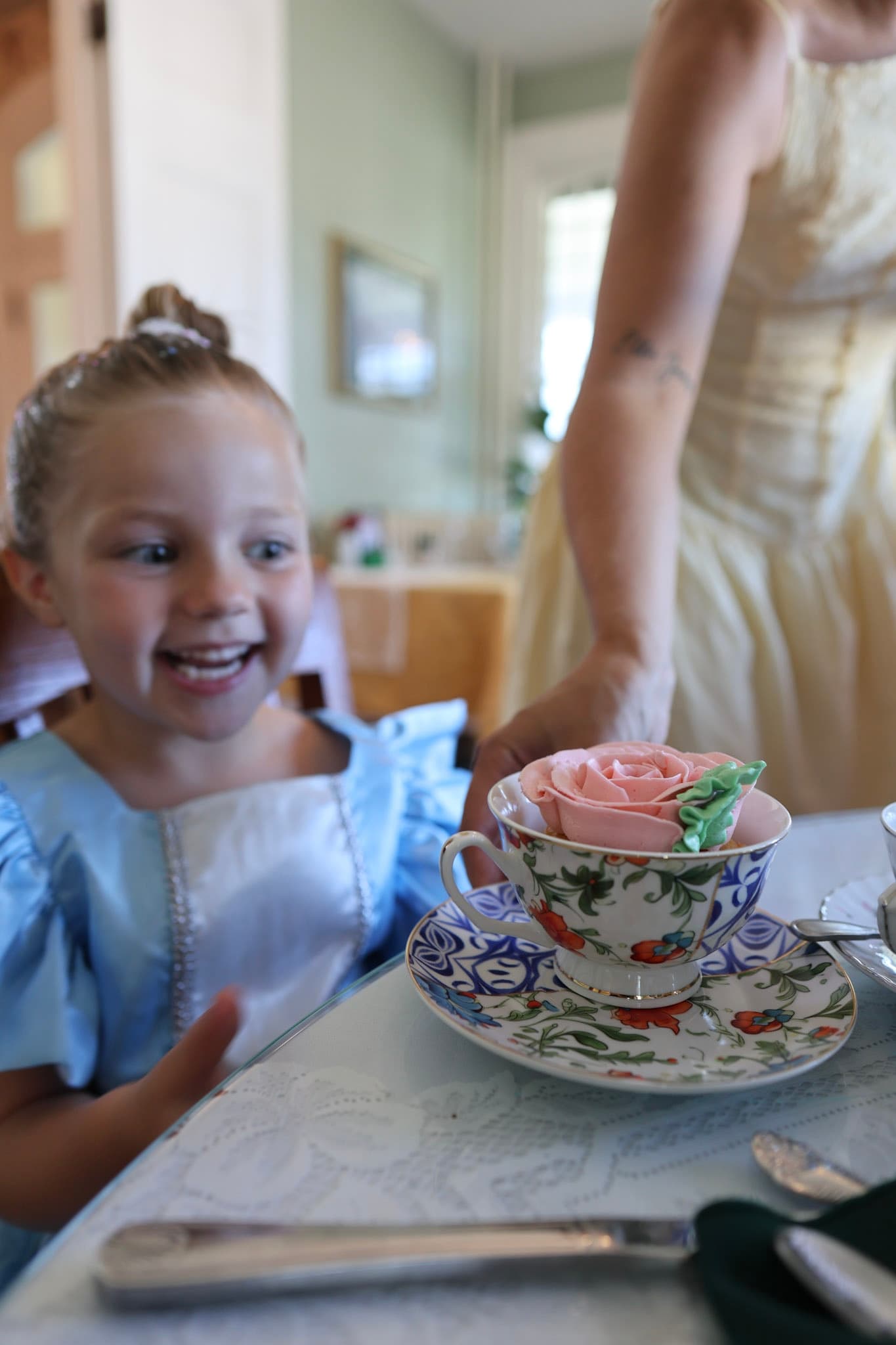
Your Tea Menu Should Be Part of the Theme
Don't forget the tea itself. The tea selection is another opportunity to tell your story.
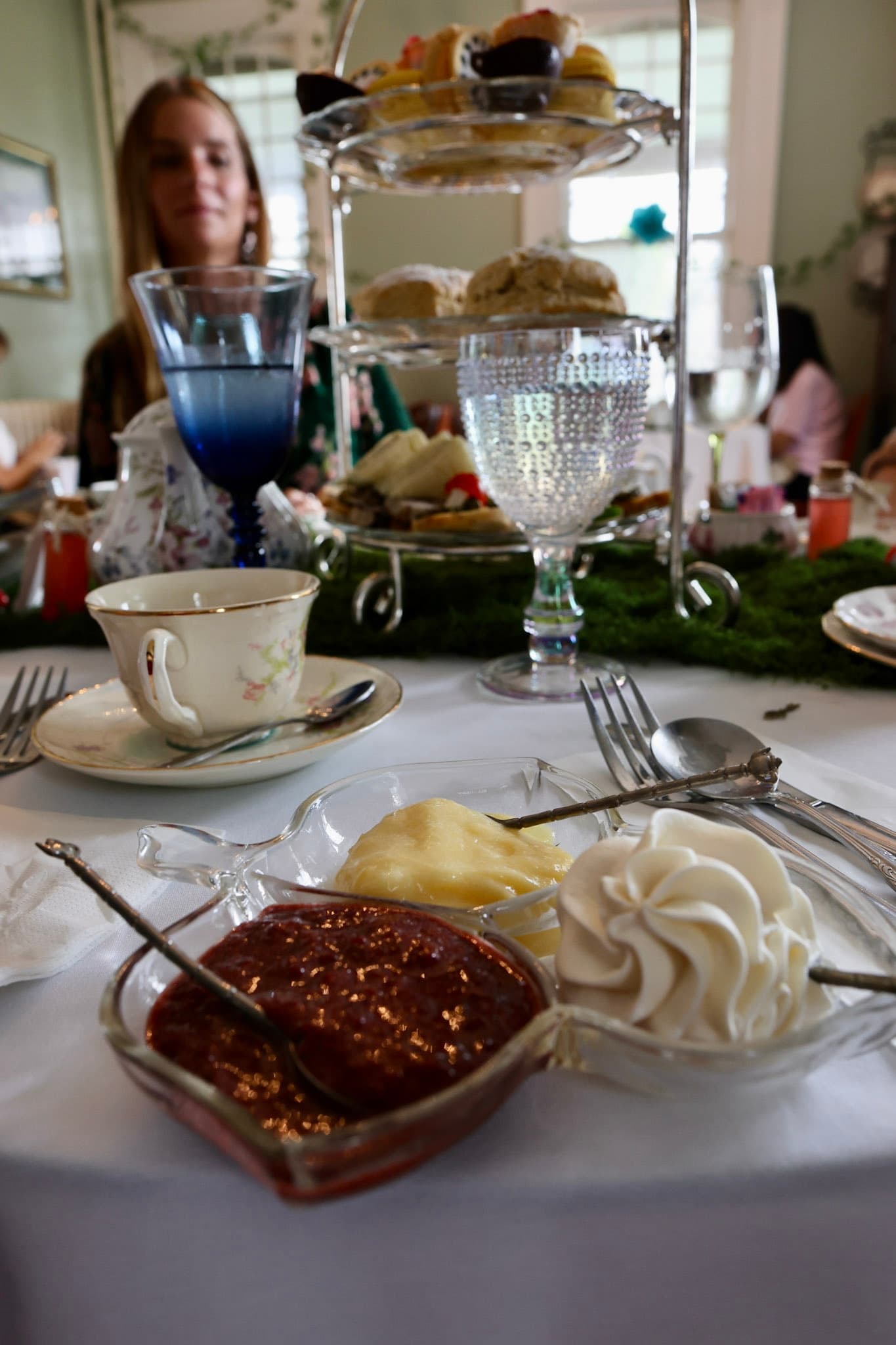
For our Alice in Wonderland tea, we chose Birthday Tea, because of course the Unbirthday Party had to make an appearance somewhere. We also served Butterfly Pea Tea with a small pitcher of lemonade. On its own, butterfly pea tea is blue. Add the lemonade and the tea changes from blue to purple.
It's essentially a little bit of Wonderland magic happening right in the teacup. And that's exactly the kind of detail we're looking for when we plan these experiences.
The décor may be what gets your guests excited when they walk through the door, but the food is what makes the experience feel complete.
For a themed afternoon tea, we try to avoid simply putting ordinary afternoon tea food onto a themed table. Instead, we look for opportunities to take something familiar and give it a little Wonderland twist. For our Alice in Wonderland tea, we thought about flavor, shape, color, and presentation. Every course offered another opportunity to bring the movie to life.
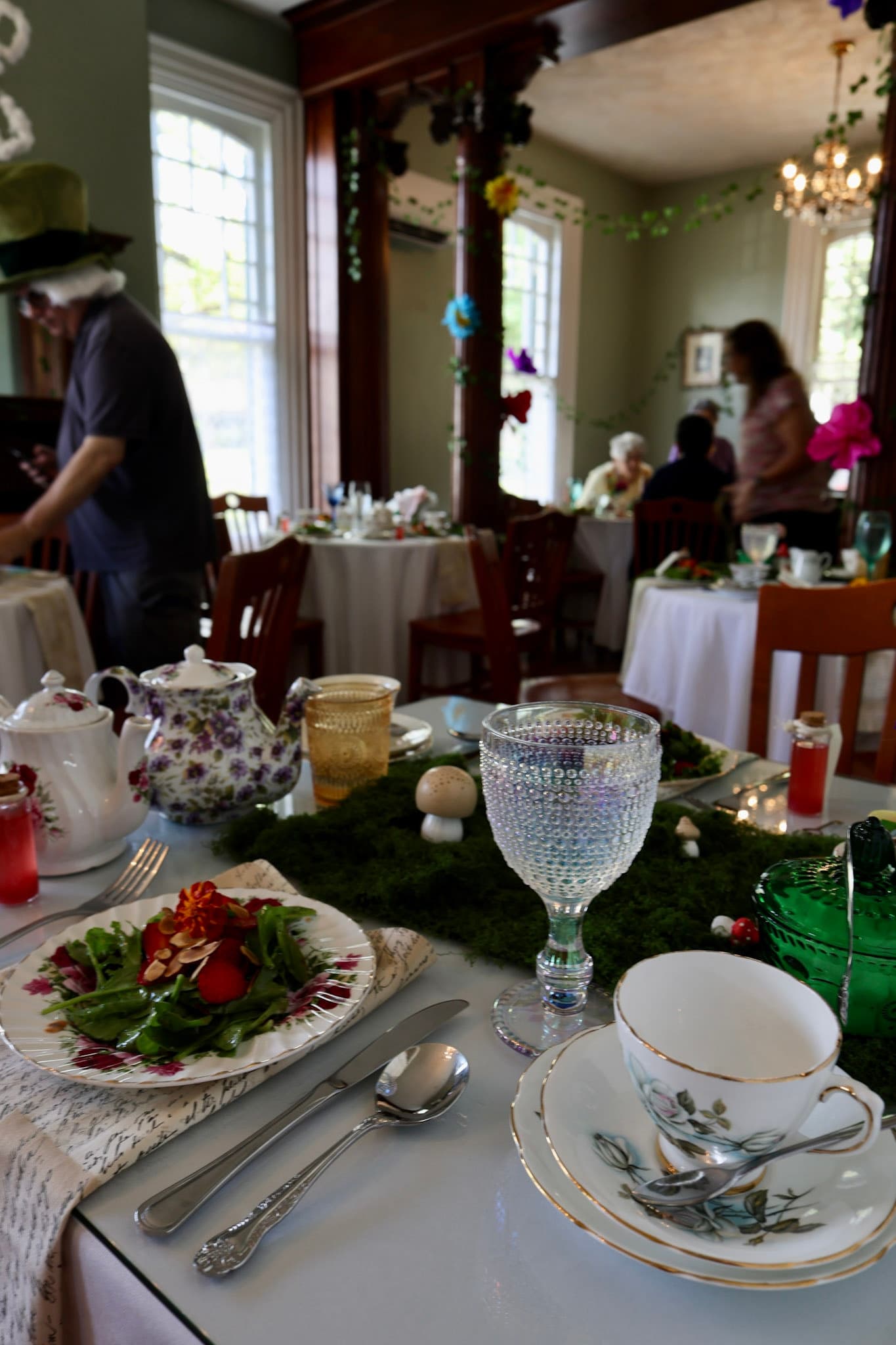
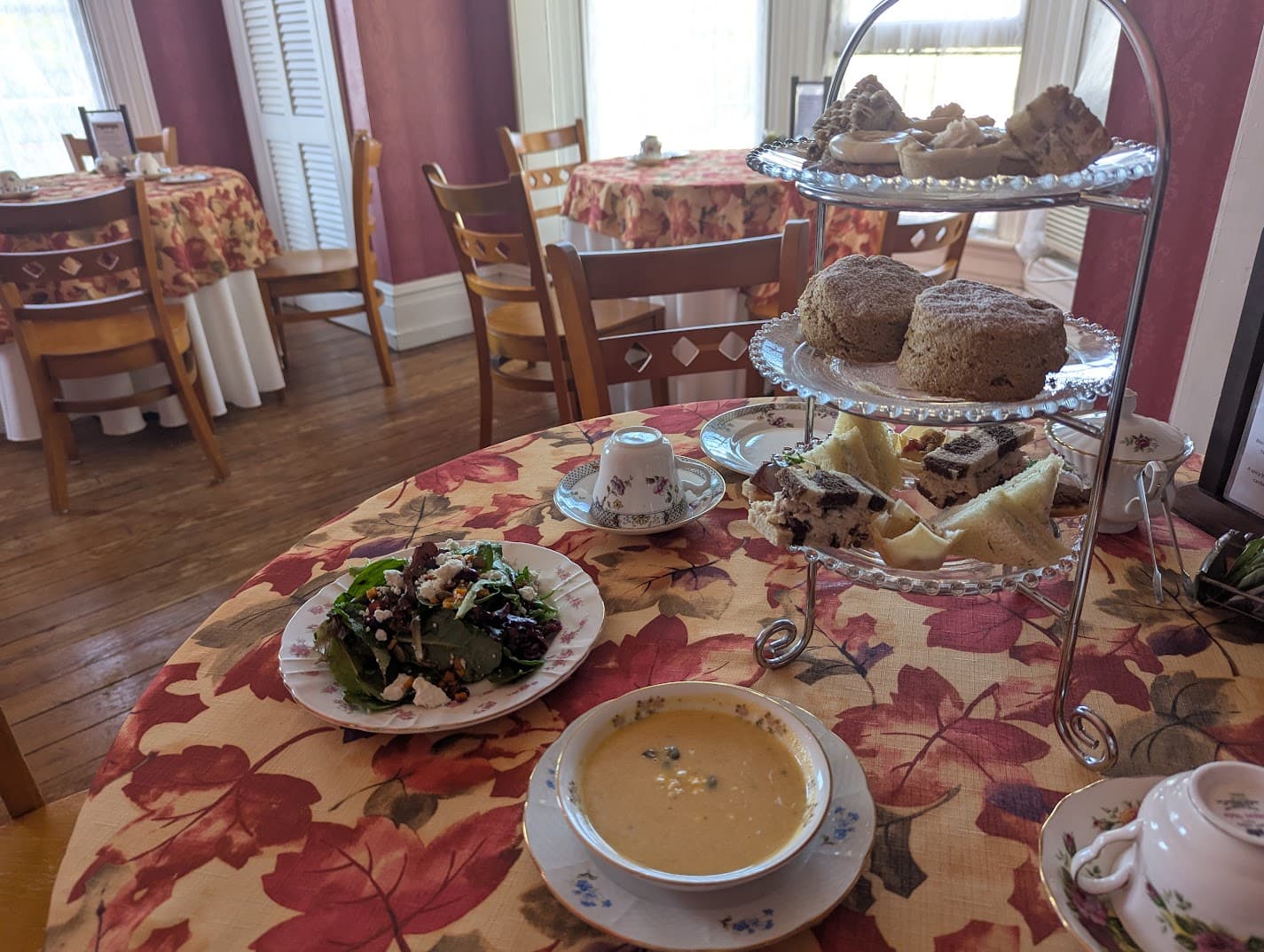
The Garden Salad
We began our meal with a mixed green salad with lemon poppyseed dressing, topped with fresh strawberries, marigold flowers, and toasted almonds. The salad was bright, colorful, and garden-inspired, while the edible flowers made it feel a little more whimsical. It felt like something that could have come straight from an overgrown Wonderland garden.
Cream of Mushroom Soup
Next came Cream of Mushroom Soup. Mushrooms are such an unmistakable part of the visual world of Alice in Wonderland that this was a natural connection. It also gave us a way to bring the fantastical garden world onto the plate before moving into the tea sandwiches.
Tea Sandwiches: Classic Tea Meets Wonderland
Of course, no afternoon tea would be complete without tea sandwiches. Some of ours were traditional, some were playful, and some were designed specifically to look like something from Wonderland.
Butterfly Egg Salad — Mom took egg salad and turned it into a butterfly by cutting the bread into a butterfly shape. This is a perfect example of how you don't necessarily need an unusual ingredient to make a dish thematic. Sometimes the shape is enough.
Cucumber, Cream Cheese & Dill — Some things simply belong at an afternoon tea. We kept this one classic, proving that not every item on a themed menu needs to be reinvented. Sometimes the best choice is to let a traditional afternoon tea staple do its job while the surrounding details carry the theme.
Turkey with Cherry Compote, Arugula & Chèvre — For something a little more unexpected, we paired turkey with cherry compote, arugula, and chèvre. The cherry brought a beautiful pop of color and a sweet element to the savory sandwich, while the combination of flavors gave this traditional tea course a more sophisticated twist.
Cheese-Stuffed Mushroom — We continued the mushroom theme with a cheese-stuffed mushroom topped with breadcrumbs and a slice of jalapeño. It was another little nod to the strange and oversized mushroom-filled world Alice encounters.
Pesto Crostini with a Tomato & Mozzarella Mushroom — Our final savory bite was a pesto crostini topped with mozzarella and tomato, arranged to resemble a little mushroom. This was another example of using presentation to tell the story. The ingredients themselves are simple and familiar. But arrange them differently, and suddenly the dish becomes part of Wonderland.
Dessert Is Where Wonderland Really Comes Alive
Dessert gave us even more opportunities to play with the movie. Sam wanted the sweets to feel whimsical without making them feel like children's party food. Each dessert needed to look beautiful enough for an afternoon tea while still giving our guests a little "aha!" moment.
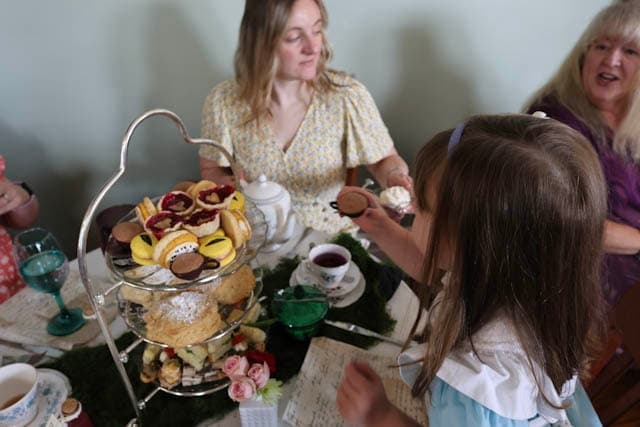
The Edible Chocolate Cup — We served a chocolate mousse cup where the cup itself was made from tempered chocolate. This was one of those details that makes the experience interactive. The guest doesn't just eat the mousse—they get to eat the vessel, too.
The Cheshire Cat Eye Macaron — Next came a Cheshire Cat eye macaron. The shape and decoration were enough to immediately connect it to one of the most recognizable characters from the movie. We didn't need to put an entire Cheshire Cat on the plate. The eyes were enough.
The Clock Shortbread — Sam also created a shortbread cookie topped with buttercream, a fondant clock, and gold crystal sprinkles. The clock was an obvious nod to the White Rabbit and his constant concern about being late. The edible glitter added just a little bit of Wonderland magic. This is another good example of how a very simple cookie can become a themed dessert through decoration.
Cherry Pie Tart with a Heart Crust — And finally, we had a cherry pie tart with a heart-shaped crust topping. The cherries brought us back to the rich red palette of the Queen of Hearts, while the heart-shaped crust was a subtle reference to the Queen herself.
Creating a Menu With Layers of References
One thing we learned while developing this menu is that not every reference has to be obvious.
Some connections are immediate:
- Mushrooms → Wonderland
- Butterfly → Wonderland
- Clock → White Rabbit
- Cheshire Cat eyes → Cheshire Cat
Others are much more subtle. The cherry compote and cherry tart bring in the rich red associated with the Queen of Hearts. The heart-shaped crust reinforces that connection. The edible glitter gives the desserts a touch of fantasy.
This is what makes creating a themed menu so much fun. You can create different levels of discovery. A guest who has never seen the movie can still enjoy a delicious afternoon tea. But a guest who knows Alice in Wonderland might look at the plate and suddenly realize: "Wait... that's the White Rabbit's clock!"
Those little discoveries are what we're after.
The Complete Alice in Wonderland Afternoon Tea Menu
When everything came together, our menu looked like this:
First Course
- Mixed Green Salad — lemon poppyseed dressing, strawberries, marigold flowers & toasted almonds
- Cream of Mushroom Soup
Tea Sandwiches & Savories
- Butterfly Egg Salad — egg salad on butterfly-shaped bread
- Cucumber, Cream Cheese & Dill
- Turkey, Cherry Compote, Arugula & Chèvre
- Cheese-Stuffed Mushroom — breadcrumbs & jalapeño
- Pesto Crostini — mozzarella & tomato mushroom
Sweets
- Chocolate Mousse Cup — served in an edible tempered-chocolate cup
- Cheshire Cat Eyes Macaron
- Clock Shortbread — buttercream, fondant clock & edible glitter
- Cherry Pie Tart — heart-shaped crust
Tea
- Birthday Tea
- Butterfly Pea Tea — served with lemonade for a magical blue-to-purple color change
The Secret to an Immersive Afternoon Tea
If we had to boil the entire process down to a few ideas, it would be these:
1. Choose a specific source. Don't just choose "Alice." Decide which Alice you're creating.
2. Study your source material. Watch it. Rewatch it. Look for details.
3. Let your existing space inspire you. Sometimes the room tells you what it wants to become.
4. Choose a strong color story. Not every room needs every color.
5. Give every room its own scene. Your guests should feel as though they're moving through the story.
6. Layer your details. Think small, medium, and large.
7. Decorate vertically. Below eye level, eye level, and above eye level.
8. Give every part of the room something interesting. Discovery should happen in every direction.
9. Start the experience before guests enter the building. Arrival is part of the story.
10. Give your guests something to touch, taste, discover, and photograph. Participation beats decoration alone.
And most importantly: Don't just decorate for the theme. Tell the story.
Our Alice in Wonderland tea wasn't created with one giant decoration or one perfect centerpiece. It came together through dozens—and eventually hundreds—of little decisions.
A red rose. A crooked doily. A hanging playing card. A mushroom. A Mome Rath. A bottle labeled "Drink Me." A butterfly-shaped sandwich. A Cheshire Cat eye. A clock-topped cookie. A heart-shaped pie crust. A cup of tea that changes color. A rabbit hole at the front door.
Individually, they're just details. Together, they create Wonderland.
Ready to plan your own themed gathering—or experience afternoon tea at The Tea Trolley? You can revisit our Mad Hatter Tea, reserve a table, or start with our guides on hosting afternoon tea at home and what to expect on your first visit.
Table of Contents

Experience Traditional Afternoon Tea in Delta, Pennsylvania
Want to experience afternoon tea instead of making it at home? Visit The Tea Trolley, our Victorian tea room in Delta, Pennsylvania, serving guests from York, Lancaster, Baltimore, and Harford County.